Yesterday, Bending Spoons agreed to buy Mailchimp from their current owner, Intuit, for $3.68 billion. And, if Mailchimp is what you currently use for email marketing, then you probably have a few questions.
Admittedly, EmailOctopus is a Mailchimp alternative, and a lot of our customers have already moved across to us from Mailchimp, so we're not exactly the most independent of sources and while we don't know what Bending Spoons will do with Mailchimp we have observed how Bending Spoons operate all their other acquisitions (such as Eventbrite or Vimeo) and there's a definite pattern to what happens afterwards. This post explains what those patterns are, and what you may want to watch as a Mailchimp user.
The short version
The deal doesn't close until 2027, so it's almost certain that nothing changes for Mailchimp customers until everything is done (quoted as "early 2027"). From then onwards, though, if Bending Spoons sticks to everything it's done with earlier acquisitions, then you can expect a smaller team and changes to pricing.
Being honest, Mailchimp has already got a lot more expensive over the last few years and only 5 months ago Intuit, its owner, laid off 3,000 people. So worst case, this would be more of the same, meaning: don't panic, just make sure you could move your list if you ever wanted to.
The deal, and why Intuit was selling
Bending Spoons are an Italian company that has already acquired a bunch of companies. Amongst its portfolio it has household names Evernote, WeTransfer, Vimeo, AOL, and Eventbrite. If it's a product you used, then stopped using, ten years ago then Bending Spoons owns it.
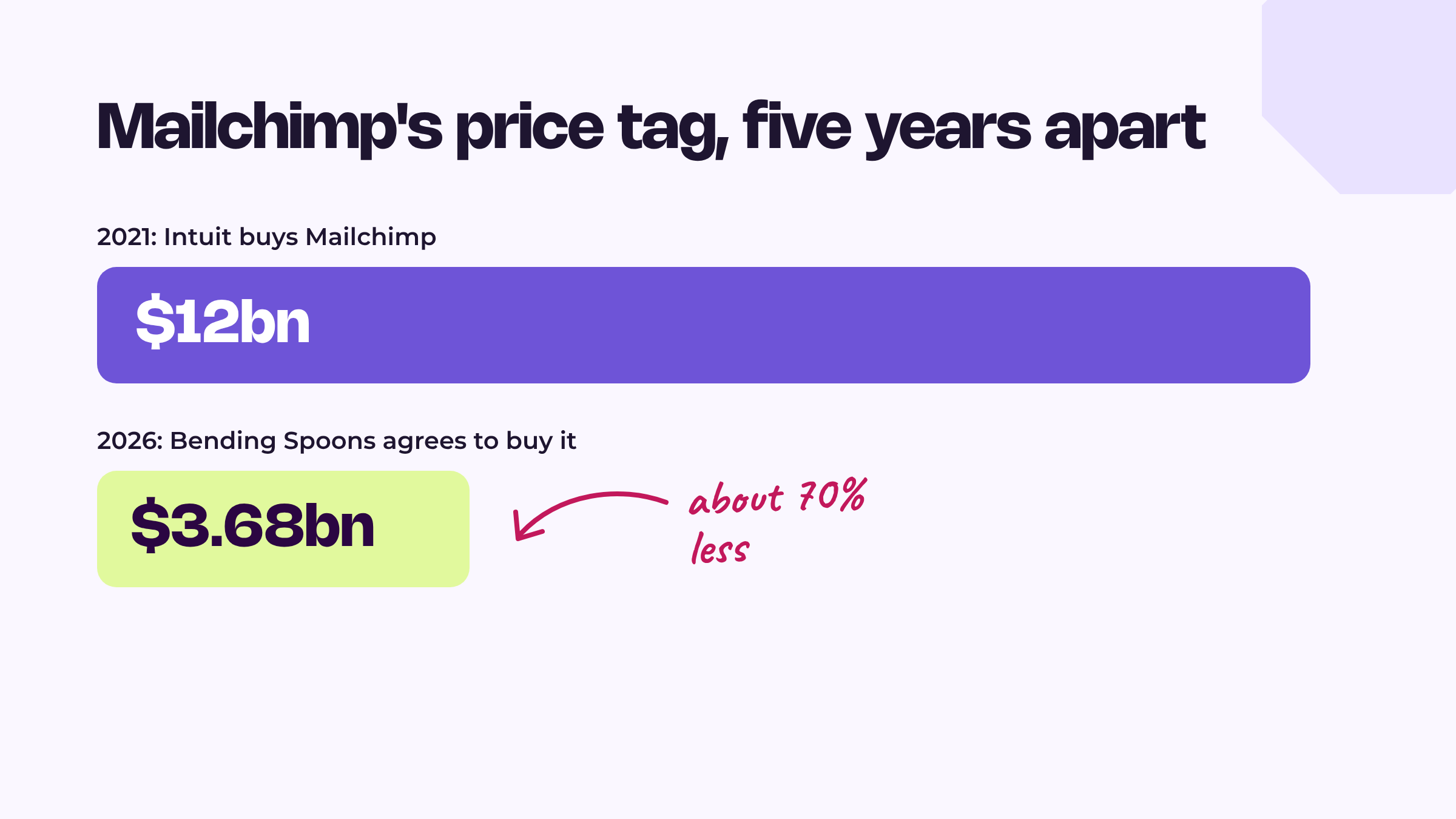
For Mailchimp it's paying $3.68 billion in cash and everything should close in early 2027, once regulators have signed off. If we look back only 5 years ago, when Intuit bought Mailchimp, they paid around $12 billion for it. So it's selling for roughly 70% less than it paid.
None of this is a huge surprise, earlier this year Intuit announced around 3,000 job cuts and said it would invest less in Mailchimp and look to run it for profit. Its CFO said at the time that buyers simply weren't offering enough. This is largely because revenue has gone flat. Mailchimp made $313 million last quarter, 1% less than a year earlier.
What usually happens after Bending Spoons buys a company
With so many acquisitions under their belt, Bending Spoons are actually quite open about how they work. It buys companies to keep them, and has never sold a material business. They openly reorganise the team they acquire and then rebuild the technology behind the product, putting more effort into "marketing and monetization.
In practice, the reorganising has meant job cuts almost every time.
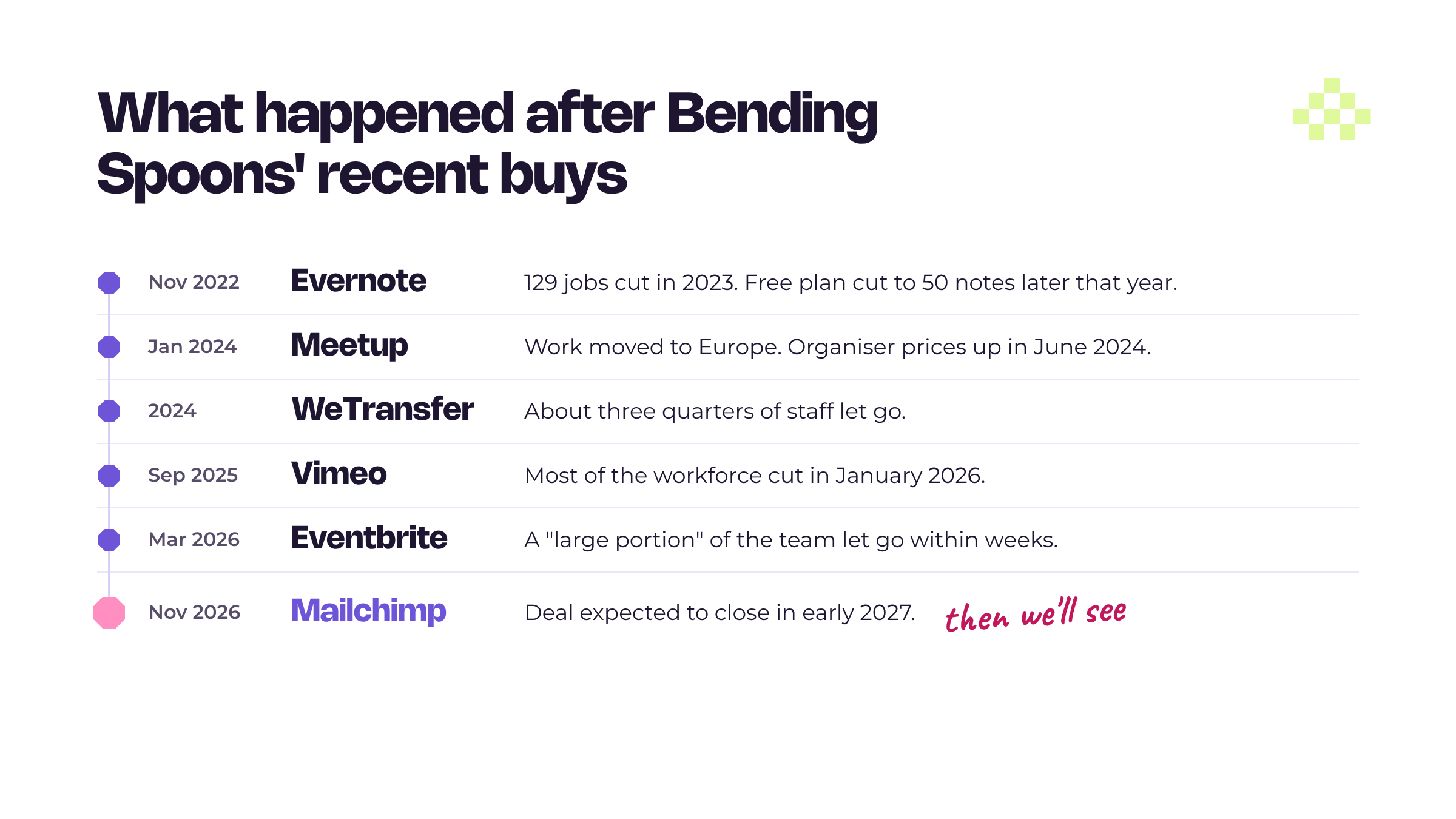
- Evernote laid off 129 people in early 2023, then nearly everyone left in the US and Chile as the work moved to Europe.
- Meetup's operations moved to Europe and its US team was restructured soon after the 2024 deal.
- WeTransfer let go of about three quarters of its staff.
- Vimeo cut most of its workforce in January 2026.
- Eventbrite let a "large portion" of its pre-acquisition team go within weeks of the deal closing in March 2026. Its new boss said a smaller, faster team would serve the business better.
The CEO of Mailchimp, Luca Ferrari has already promised to "invest substantially in the business" once the deal closes and, while that's as specific as it gets for now, that's sounding much like there's a big tech overhaul planned.
Mailchimp is the biggest acquisition yet for Bending Spoons, so, even after May's layoffs, a large restructure seems likely. As a user, the part that would affect you most is support. Our guess is that more questions will be handled by help articles and AI, with most of the human time going to customers on bigger plans. If you're on a free or cheaper plan and you count on reaching a person when a campaign goes wrong, it's worth assuming that'll get harder.
Mailchimp's prices were already going up
The 'Chimp didn't need a new owner to get more expensive. If we look back to 2019 their free plan covered 2,000 contacts and 12,000 emails a month. 2022, post Intuit acquisition, saw the cost of their price plans increase by around 30% and their free plan fell to 500 contacts.
Then, earlier this year, the free plan was cut again, to 250 contacts and 500 sends a month (with no more than 250 a day).
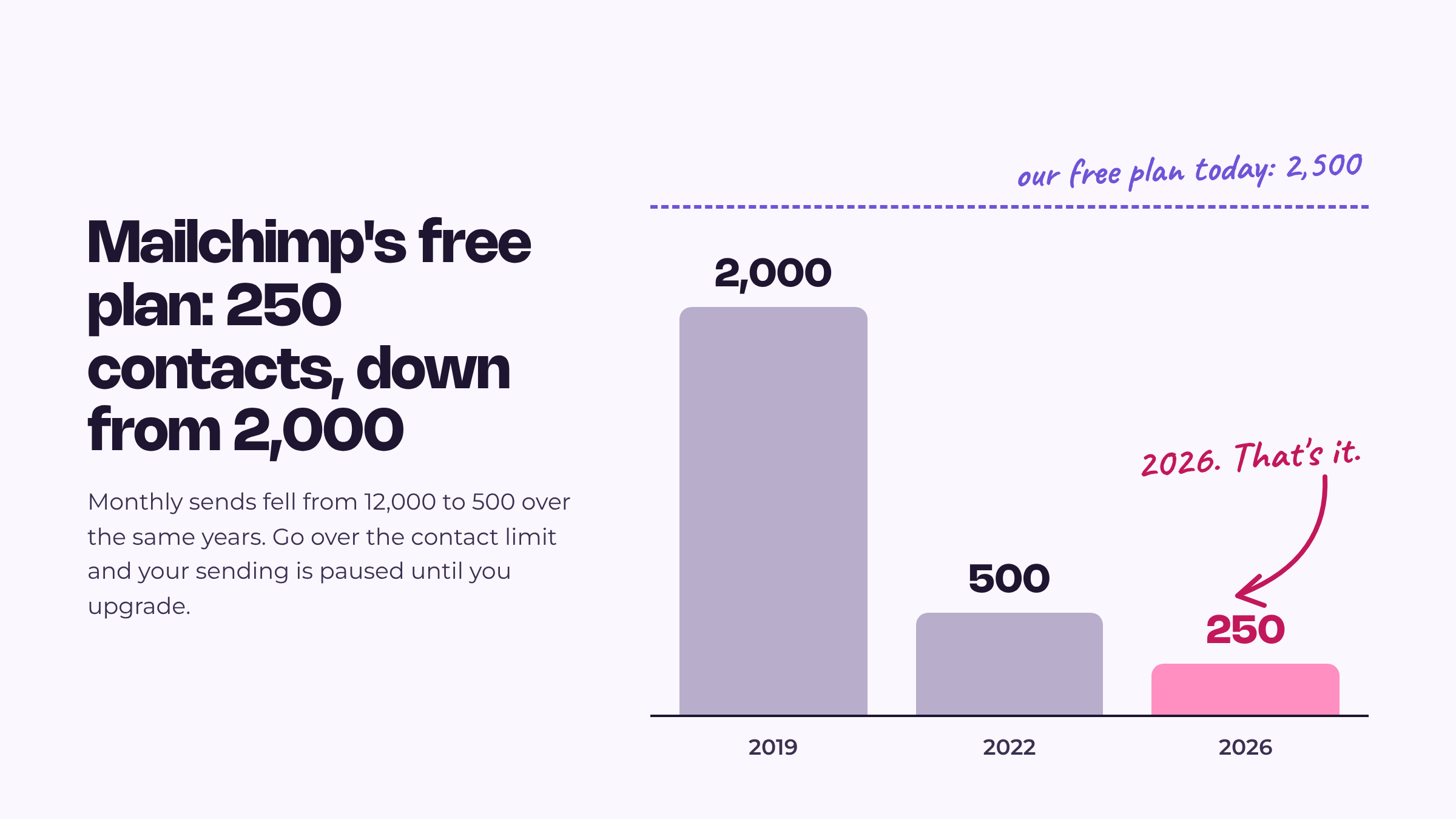
Bending Spoons has changed prices after earlier deals too. Evernote limited its free plan to 50 notes and one notebook in December 2023, about a year after the sale, and its top plan now costs $249.99 a year. Meetup put up its organiser prices in June 2024, a few months after it changed hands.
Put those together with flat revenue and we'd be surprised if Mailchimp's pricing or plans stayed the same through 2027. It might not be a straightforward price rise, though. These are the things we'd look out for:
- the free plan getting smaller again, or going altogether
- features moving out of cheaper plans and into pricier ones
- tighter contact bands, so your bill jumps sooner as your list grows
- older plans you've kept at a legacy price being retired
- changes to what counts as a contact (they already count unsubscribed contacts towards your price plan)
What probably won't change
Mailchimp isn't going to disappear. Bending Spoons doesn't sell the companies it buys, and it's paying $3.68 billion for this one, so it has every reason to keep it running.
Some products have genuinely got better under its ownership. Evernote was rebuilt on Bending Spoons' own technology and its syncing got noticeably faster.
So we wouldn't leave Mailchimp tomorrow because of this. We'd just pay a bit more attention than usual over the next year or so.
Make sure you could move if you wanted to
Even if you're happy where you are, it's worth making sure your email setup isn't stuck in one place. Most of this takes an afternoon.
- Export your audience, including unsubscribed and cleaned contacts. Those are what stop people who opted out being emailed again, wherever you send from next.
- Download reports for any campaigns you want a record of.
- Make a note of everywhere Mailchimp is integrated. That's likely signup forms on your website, your Shopify store, any other integrations. These are the bits people forget, right up until they realise they're getting no new sign ups.
- Write down your automations. Note what triggers each one, which emails it sends and how far apart. Automations rarely move across on their own, so a simple list saves a lot of head-scratching later.
- Check whether you've authenticated your sending domain (the DNS records that help your emails reach the inbox). If you have, you'll need to set that up again on any new platform, so find out who manages your DNS.
- Check your plan and when it renews, and keep an eye out for anything Mailchimp sends about terms or pricing. Those emails have a habit of ending up in the promotions tab.
If you do try another platform while you're still on Mailchimp, keep unsubscribes in sync between the two. Nobody who opted out should get an email because they were still on the other list.
Where we come in
We're a relatively small (15 people!), independent and self-funded business. There are no outside investors and no parent company waiting for a return, so our pricing only has to make sense to us and to the people who use us.
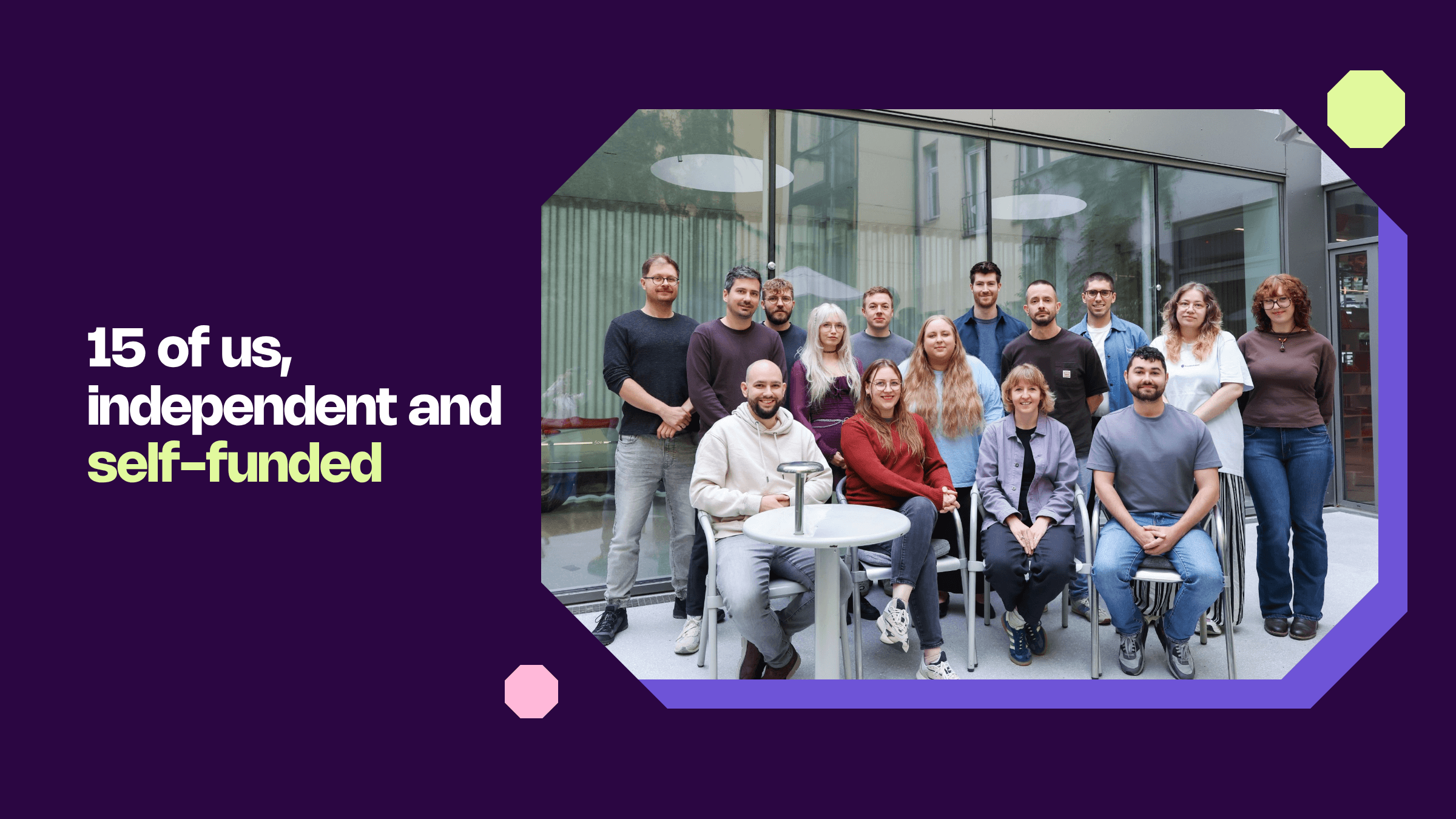
It's also why our free plan isn't going anywhere. While Mailchimp and others have been cutting theirs back, I've previously written an open letter explaining why we're keeping ours. The short version: it's a long-term investment in the people who use it, and being in total control means we can afford to take that long view. It covers up to 2,500 subscribers and 10,000 emails a month. It doesn't expire, and you don't need a card to sign up.
If you decide to move, our guide to switching from Mailchimp walks you through it, including why your unsubscribes should go in first. If you'd rather wait and see, that's completely reasonable. Just get a copy of your list either way.
And if you've got questions about any of this, reply to one of our emails or message us on chat. Someone on our team will get back to you.